Showing posts with label beauty of playing piano. Show all posts

Sunday, January 21, 2018

Learning the Piano: Lesson 5 - Compiling Everything Together

Learning the Piano: Lesson 5 - Compiling Everything Together
Nathan Cheng
How to Play Popular Piano in 10 Easy Lessons, Norman Monath

Though basic, with the information I learned in the last four lessons, I can begin to dabble in songs and pieces. Monath says, "My purpose in starting you that way was... to let you prove to yourself that you had the dexterity to necessary to play chords and melodies together; to help you learn how to read the treble clef notes in a more musically satisfying way than would have been the case if you just played notes with your right hand; and to let you see for yourself how even the simplest of piano arrangement can result in beautiful sounds" (Monath 55). Monath summarizes the objectives of the last four lessons, and begins to bridge them to each other.

Monath introduces chromatic scales-- scales that ascend/descend in half-step intervals (Monath 56). A better way to grasp chromatic scales are that they are scales that alternate from flat note to natural note and from sharp note to natural note respectively.
A chromatic scale
In addition to chromatic scales, this lesson also contains songs that contain elements of the previous four lessons. In these images I play a rendition of Auld Lang Syne that contains a unique key signature (Lesson 4), a right hand melody (Lesson 3), chord cues (Lesson 2), and well, notes (Lesson 1).
I had originally planned to upload a video of the song, but the audio quality of my recording was shoddy

Sheet music used
Conclusively, these five lessons into learning the piano have been a blast. I thoroughly enjoyed learning and playing throughout, and the lessons have been instrumental to my growth. I believe that I may continue to teach myself piano in the future, provided I have the time. To my fellow bloggers, how would you say your journey into your new skill has impacted you? Would you continue doing it in the future?

Monath, Norman. How to Play Popular Piano in 10 Easy Lessons. Simon & Schuster, 1994.

Learning the Piano: Lesson 4 - Black Keys (Sharps and Flats)

Learning the Piano: Lesson 4 - Black Keys (Sharps and Flats)
Nathan Cheng
How to Play Popular Piano in 10 Easy Lessons, Norman Monath

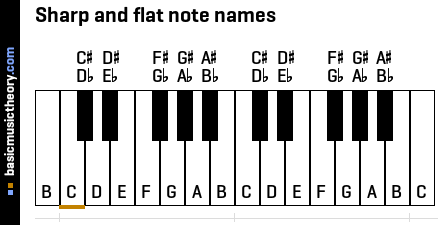
The next step in the journey of learning a piano is to learn about the intricacies of of sharps and flats. The sharp/flat notes are located on the black keys of the piano. Having no name themselves, their titles are derived from their surrounding notes (Monath 49). For instance, a black key in between the A and B notes would be interchangeably called A sharp or B flat.
Image result for a sharp and b flat
Note how the black keys have two names-- One denoting a half-step down (flat) from the higher note and one denoting a half-step up (Sharp) from the lower note
Consequentially, sharps and flats have their own symbols in sheet music to let the musician know to play a note either sharp, flat, or natural (to not be sharp or flat).
Image result for sharp symbol
Symbols from left to right: sharp, flat, natural
Also, a composer may want a note in an entire song to be flatted or sharped, so they may write instructions in the key signature. When referring to these unique key signatures Norman Monath writes, "The most commonly used key signatures you will come across... are the following seven" (Monath 52). The graphic that illustrates what he means is below.
Seven most common key signatures
With all this in mind, Monath provides examples of different renditions of songs in different key signatures. This indicates to the student that while the renditions contain different notes, they have the same sound in relation to each other.
Renditions of "Twinkle, Twinkle, Little Star"
One of my attempts at the different renditions
All in all, I think that the addition of black keys into my knowledge of the piano will help me in learning more complex songs. It was quite fun to play music with the same rhythm with different notes but still have the same result of a familiar melody. My question is, have you ever committed yourself to doing something that requires a lot of patience to master?


Monath, Norman. How to Play Popular Piano in 10 Easy Lessons. Simon & Schuster, 1994.

Saturday, December 23, 2017

Learning the Piano: Lesson 3 - Chords

Learning the Piano: Lesson 3 - Chords
Nathan Cheng
How to Play Popular Piano in 10 Easy Lessons, Norman Monath

To begin this post, let's define what a chord is. According to How to Play Popular Piano in 10 Easy Lessons, "A chord is a combination of three or more tones sounded simultaneously..." (Monath 37). Typical chords consist of notes that are certain distances from each other, called intervals. When these notes are played at the same time, the sound is pleasing. This also explains why one can't just slam their hand on a piano expecting a beautiful sound to emanate from it, as certain combinations of notes have to be pressed to form a pleasing sound (Monath 38).
Silent Night sheet music. Chord cues are circled in red

The first chords taught by the book are the C, F, and G chords. All three chords consist of three notes one note apart from each other and are played with one's left hand. This may sound confusing but the graphic below should help.
Fingerings for C, F, and G chords in reference to Middle C
How to Play Popular Piano in 10 Easy Lessons also mentions other uses for chords besides supporting the melody in a song. An example of this is called a vamp. A vamp is pretty much when a pianist plays a chord a few times as an improvised introduction into a song (Monath 44).
My attempt to do a vamp with the C chord
Verily, chords are a new branch of music I have no experience in, and How to Play Popular Piano in 10 Easy Lessons clarified them very well. The instrument I am proficient in, the Bb clarinet does not possess the ability to play chords, so producing and hearing a chord on the piano was certainly a new and favorable experience. I personally can't wait to combine the chords I've learned with new melodies to play more complex songs that I couldn't have played on the clarinet.

To those who play an instrument; what memories do you fondly look back to with your instrument?

Monath, Norman. How to Play Popular Piano in 10 Easy Lessons. Simon & Schuster, 1994. 

Learning the Piano: Lesson 2 - Playing Melodies

Learning the Piano: Lesson 2 - Playing Melodies
Nathan Cheng
How to Play Popular Piano in 10 Easy Lessons, Norman Monath

The next step in learning an instrument after memorizing the notes is beginning to experiment with reading music in order to play melodies and songs. The book goes over the treble clef notes and mentions the use of middle C as a reference for other notes. It also mentions ways to remember the treble notes; the notes in between the lines can be remembered as "FACE" and the notes on the lines can be remembered with the acronym "Every Good Boy Does Fine" (Monath 31).

However, some things to note are that at this point the melodies/songs that are provided in How to Play Popular Piano in 10 Easy Lessons do not have any sharp or flat keys; more commonly referred to as the black keys (Monath 34). Also, I chose to ignore the chord marks, as the next lesson (Lesson 3) is about chords and I didn't want to give myself any bad habits before learning about them. Another article to remember is that the book also states to not worry about using certain fingers to press a key, it says, "...don't concern yourself at this point with which fingers to use" (Monath, 35). With all that being said, here are images of my attempts to play the book's version of Silent Night.


Sheet music provided
All in all, it didn't take too long to play this piece. It was very straightforward and the fact that the melody was very recognizable helped. I think that the book is certainly helping me on my venture into the piano. It's very concise and its explanation of the material is clear. Then again, this lesson focused on playing melodies with treble clef notes, I'm not sure how I'll do with bass clef notes and chords on the next lesson.

What were your first thoughts when taking the first steps in learning a new instrument?

Monath, Norman. How to Play Popular Piano in 10 Easy Lessons. Simon & Schuster, 1994.

Saturday, November 25, 2017

Learning the Piano: The Basics

Learning the Piano: The Basics
Nathan Cheng
How to Play Popular Piano in 10 Easy Lessons, Norman Monath

Learning a new instrument can be equally challenging and rewarding. Hopefully, as one's skills with the instrument progresses, so does their enjoyment. Learning the piano has always been something I had thought of doing (seeing as how there's a piano in my living room) but never had the time to do.

However, acquainting myself with a completely new instrument seemed... daunting. My contextual knowledge of music stems from being in school band where I play the clarinet. The thing with the clarinet is that it is limited to playing one note at a time. On the other hand, a piano can play multiple notes, which means it is able to play melodies and harmonies and chords.

In "How to Play Popular Piano in 10 Easy Lessons", Norman Monath explains in his introduction, "You will learn how to play melodies with your right hand... and how to play chords in different ways so that you can add interest and expressiveness to your renditions" (Monath 16). This excerpt illustrates the complexity of the piano (compared to a clarinet). It's ability to play chords and melodies makes it differ from other instruments (Monath 16).
Playing notes on right hand
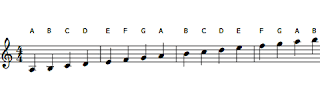
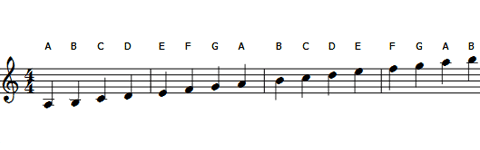
Playing the notes with my right hand was fairly straightforward. I'm familiar with the notes since it is the same treble clef (The swirly symbol at the far left of a sheet of music that dictates what the notes are) as the clarinet. For reference, here is the treble clef and its notes.
Treble Clef
Treble clef notes

Playing notes on left hand
However, acquainting myself with the bass clef notes on my left hand was, to be frank, a lot harder than I had perceived. Learning how to play chords was easy, but playing notes in the bass clef with my non-dominant hand was challenging. Since the notes are written the same way as the treble clef, I almost always instinctively think of the treble clef note, not the bass clef note. For reference, here is the bass clef and its notes.
Bass Clef
Bass clef notes


Verily, I think that memorizing the notes on the bass clef will be the most challenging aspect of learning piano, though once I pass this hurdle I think that this endeavor into the piano will have its rewards.

My question is; To those who play instruments on the bass clef, is there any acronyms or tricks to remembering the notes? For the treble clef, the acronym "Every Good Boy Deserves Fudge" can be useful for remembering the notes on the lines, and knowing that the notes on the spaces between the lines spell "FACE" is another trick to recalling the notes. Is there anything similar to the aforementioned that works with bass clef?

Monath, Norman. How to Play Popular Piano in 10 Easy Lessons. Simon & Schuster, 1994.

Tuesday, November 24, 2015

Playing piano

I have been obsessed with playing music, creating music and singing for so long and the reason that I love music it is because I was born in a family that were passionate for music. The hobby that I really wanted to improve on is playing piano because since I was eight years old I practiced a lot (without a teacher or anyone to teach me how to read notes or how to play music). The truth is I gave up a lot during the process of learning but now I challenged myself to play it almost like a professional pianist. The book that is helping me is called," The only basic piano instruction book you'll ever need: learn to play from reading notes to constructing complex chords" which explains each step slowly." Looking at your right hand, let's assign numbers to each of your fingers..."(Halpin13). "Exercise 11....... Practice,Practice, Practice.. It's pretty basic: The more you practice, the better you sound. If you're really serious about learning how to play the piano, you should at a minimum practice ninety minutes a week in three thirty minute practice sessions"(Halpin23). Based on the steps in the book it was really simple to reach to Exercise 11. After this step I will use my left hand as well to practice and in this step it is going to be harder because I am use to playing only with right hand.